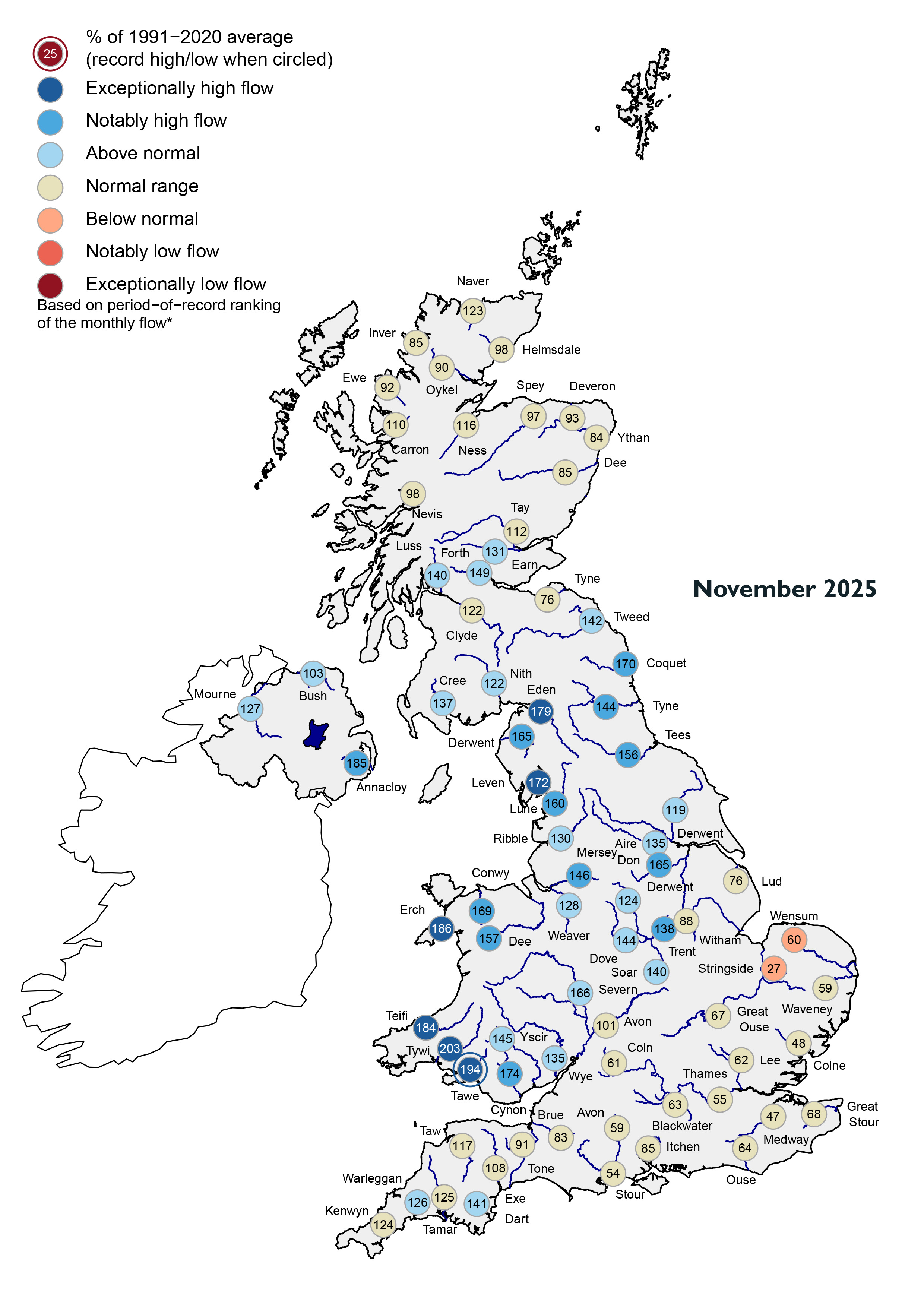
November was the wettest month of 2025 so far, with 131% of average for the UK as a whole and exceptional rainfall
across large parts of the country. It rounds off a transformative autumn, with many areas quickly shifting from drought
concerns to flood risk (although precautionary drought restrictions remained at month-end even in some of the wetter
areas). With steep increases in soil moisture levels, river flows climbed sharply in responsive catchments – flood alerts
were widespread and there was locally severe flooding in south Wales. Correspondingly, reservoir levels recovered
in many upland impoundments: stocks for England & Wales climbed from 68% in October to 81% of capacity (only
3% below the typical November stocks) and some reservoirs saw even greater increases (e.g. in the Pennines where
Derwent Valley and Washburn went from substantially below average to 13% and 8% above, respectively). However, in
southern and eastern England, despite some notable increases, stocks typically remained below average (e.g. 28% below
average at Wimbleball and 30% at Ardingly), reflecting a drier autumn that extends long-term rainfall deficiencies.
Notably low groundwater levels were also apparent across the southern and eastern Chalk, although recharge has
commenced in some areas, and it will take time for the November rainfall to have an impact. Entering winter, the
picture is mixed, with simultaneous flood warnings and drought restrictions in place, reflecting both spatial variations
in autumn rainfall and the role of aquifer/catchment properties in dictating the rate of recovery. The Thames Water
temporary use ban was lifted on 27th November and further cessation of drought status was planned in other areas for
early December. And yet, concerns remain, and winter rainfall will be of pivotal importance in dictating the water
resources outlook for 2026, particularly in the south‑east. The latest Hydrological Outlook indicates normal to below
normal flows and groundwater levels are likely in parts of southeast England and in northern Scotland through the winter.