The UK Surface and Groundwater Archives (SAGA) Committee convened for its 43rd Annual meeting on the 4th March 2026
The SAGA Committee meeting provides a forum for discussion between stakeholders in UK hydrometric monitoring and helps impart a strategic overview of the activities of the National River Flow Archive (NRFA) and the National Groundwater Level Archive. The Committee comprises representatives of organisations from across the UK involved in the measurement, management or use of hydrometric data. This year's meeting was attended by members of the UK Centre for Ecology & Hydrology (UKCEH), the British Geological Survey (BGS), Environment Agency (EA), Scottish Environment Protection Agency, Natural Resources Wales, Department for Infrastructure – Rivers Directorate, the Met Office, Canal & River Trust, British Hydrological Society, Chartered Institution of Water and Environmental Management and representatives from the UK water industry (Thames Water). Amongst the items discussed at this year's meeting was a review of the activities of the NRFA over the last 12 months.
As custodians of the nation's central database for hydrometric data, the NRFA's activities have included updating and ongoing maintenance of its holdings. Ensuring that the Archive is up to date involves an intensive programme of year-round work to quality control new data before it is added to the Archive, as well as reviewing existing data.
The annual update to the Archive this year contained data for the water year 2023/2024. This water year was marked by 12 named storms – the highest number since the naming system began in 2015. Notably, Storm Babet in October 2023 brought widespread disruption, with strong winds and intense rainfall across northeast England and much of Scotland, prompting two red weather warnings for rain. The winter half-year from October 2023 to March 2024 was the wettest on record for England, and caused many prolonged high flows across large parts of England, including on some of our larger rivers (e.g. Trent, Warwickshire Avon and Tywi).
Alongside the routine update to daily mean flow data, version 14 of the national Peak Flow Dataset was published on the 21st August 2025, which included an annual update to peak flow data as well as a period of record review of a subset of peak flow stations. Version 14 of the dataset provided flood data for 926 river flow gauging stations across the UK and during the review almost 3371 years of station data were evaluated. At the same time the Flood Estimation Handbook (FEH) statistical method was updated to enhance the accuracy of flood frequency estimates. The method incorporates four new catchment descriptors, so these were also added to the Peak Flow Dataset. In September, WINFAP5.3, the industry standard software for estimating peak flows and flood frequency curves for gauged and ungauged catchments, was released, enabling users to implement the new method and use the associated catchment descriptors.
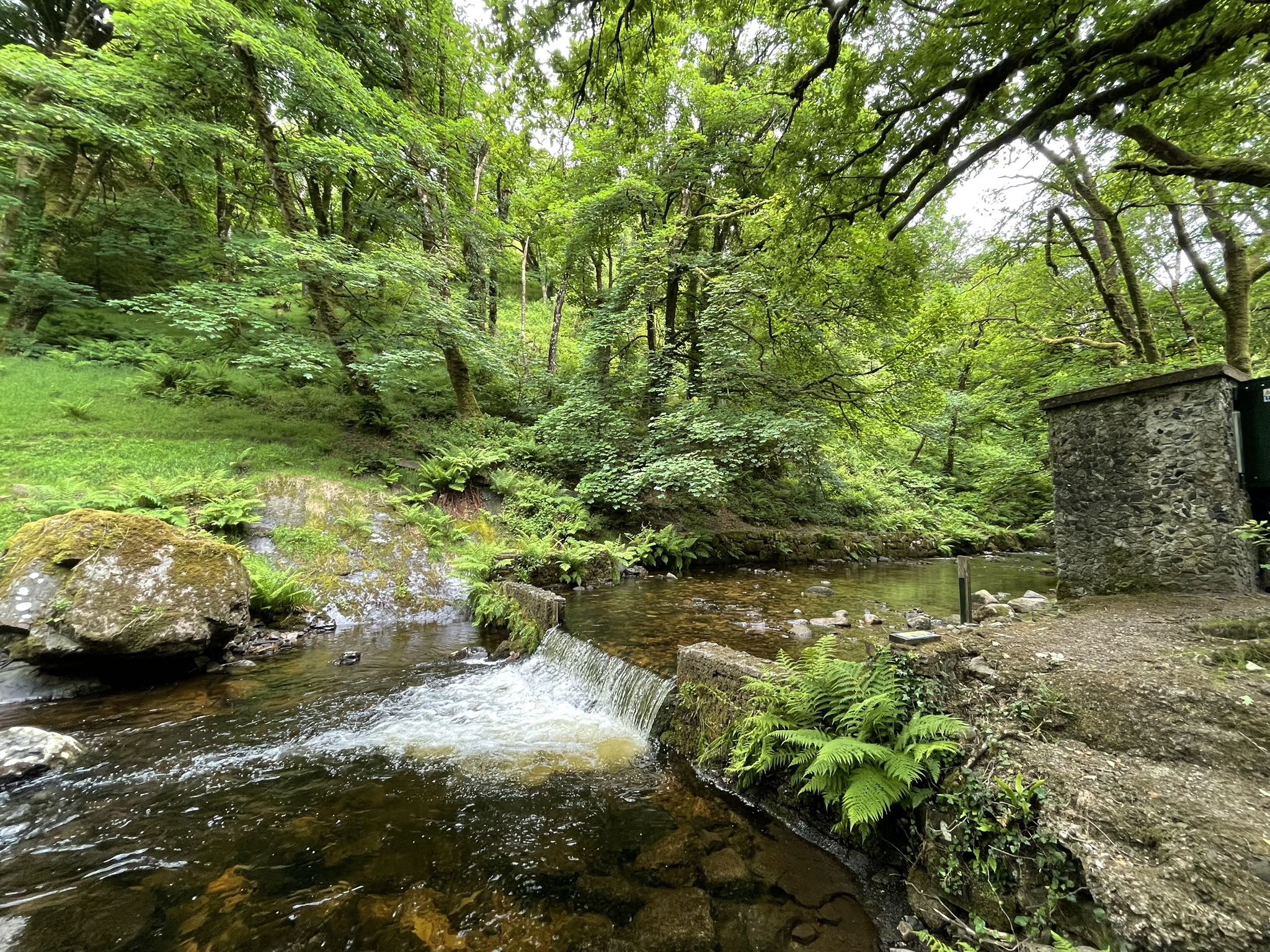
During 2025/2026, NRFA staff carried out two liaison visits, to the Devon and Cornwall areas within the EA. In both cases, the visits provided an opportunity to meet with the Hydrometry & Telemetry and Hydrology staff and discuss the EA's flow gauging network in the area. Updates to the supporting information were identified which resulted in improvements to the data holdings of the NRFA. The trips included visits to gauging stations covering a range of different catchment types and sizes, as well as monitoring technology, including the Dart at Austin’s Bridge (46003), the Exe at Thorverton (45001) and the Taw at Umberleigh (50001) in Devon. In Cornwall visits included the Gannel at Gwills (49004), the Fowey at Restormel (48011) and the Wolf at Germansweek (47025).
Over 2025/2026, both the NRFA and National Hydrological Monitoring Programme (NHMP) engaged with key stakeholders and the user community. Activities included: data provision for the WMO Global State of Global Water Resources Report for 2024; journal papers on the attribution of the winter 2023/2024 floods and reviewing UK drought trends; presentations at two British Hydrological Society events, the National Environmental Monitoring Conference and the Floods and Drought Research Infrastructure (FDRI) Uncertainty Workshop; hosting a Workshop on peak flow data; and a key contribution to the House of Lords inquiry on drought preparedness.
The NRFA website remained very popular in 2025/2026. There were around 31,000 total downloads across river flow, spatial and metadata and about 676,000 page views by 64,800 users across all pages on the NRFA website. The most popular pages were the search and home pages, which both received nearly 53,000 views.
The NHMP team responded to more than 70 media requests in collaboration with the UK Hydrological Outlook team, in relation to the 2025 drought conditions which affected much of the country. The UK Water Resources Portal, a unique web-based system for tracking the hydrological situation in near-real-time, continued to be maintained with updates to river flows, rainfall, soil moisture and groundwater level data. In 2025 it received over 11,500 views, up 18% on 2024 from across all continents.
Steve Turner, Scientific Lead for the National River Flow Archive, commented that “2025/2026 was a successful year for the NRFA, as it was rewarding to see how effectively the data, methods and software teams worked together to produce the version 14 Peak Flows Dataset for the benefit of the users. At the SAGA Committee meeting our plans for the next 12 months were discussed. They comprise continued improvement to our data, website and tools, as well as plans to work with the FDRI Programme on digital systems.”